As more South Africans turn to solar power, portable power stations (for load shedding), and off-grid living, energy-efficient appliances are fast becoming essential — especially in the kitchen.
For anyone cooking with limited electricity, choosing the right device or appliances can mean the difference between a convenient hot meal and a completely drained battery bank.
If you’re looking for a low wattage cooker that is recommended for home solar systems or portable power setups, or for those that simply want to save a bundle on their home electricity costs, the Remoska is your ideal all-in-one cooking companion. Compared to conventional air fryers and electric ovens, Remoska offers a smarter, more power-conscious way to prepare real, hearty meals that are healthy, tasty and easy to cook.

Why High-Power Cooking Appliances Struggle Off-Grid
Air fryers and electric ovens might be popular, but they’re not designed for energy-restricted environments such as solar users, off grid adventurers or South Africans using portable power stations during their load shedding timeslots. Most air fryers consume up to 2500 watts, and electric ovens often draw between 2000 -4500 watts or more. These appliances often overwhelm solar inverters, deplete portable power stations, and may even trip and damage select off-grid systems.
Common Problems with Air Fryers and Ovens on Solar Power:
- High wattage drains batteries fast
- Inverter overloads and trips
- Long preheat and cooking times increase energy usage
- Poor efficiency when power is limited
- Bulky and not portable for camping or caravanning
Remoska: The Best Low Wattage Cooker for Home Solar and Off-Grid Cooking
The Remoska electric cooker runs on just 400 to 580 watts, making it one of the most energy-efficient cooking appliances available today. It’s designed for real-world use in homes with solar power, inverters, and portable energy systems, or for off-grid situations like caravans, camping, and load shedding.
Key Benefits of Remoska for Solar-Powered Homes and Portable Power:
✅ Low energy consumption: Uses up to 70% less electricity than a standard electric oven
✅ Ideal for solar and battery systems: Won’t overload inverters or deplete batteries
✅ Compact and portable: Lightweight and compact — perfect for travel and off-grid kitchens
✅ Versatile cooking: Roast, bake, grill, and more all in one pot
✅ Quick and efficient: Short cook times with minimal heat loss
✅ No preheating needed: Starts cooking immediately, saving even more power
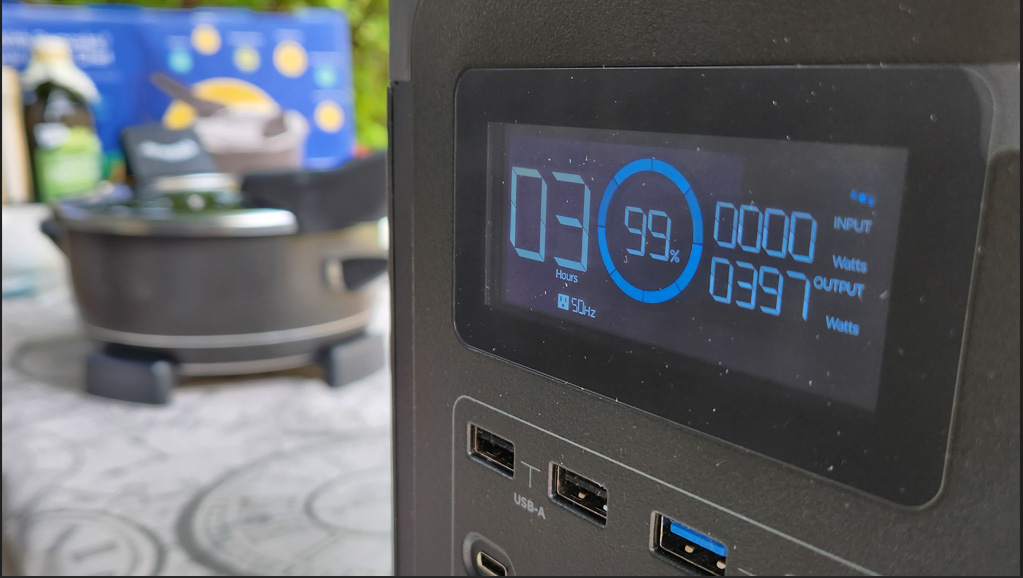
*Image Above: Actual reading of 397W of power consumption on a EcoFlow 2Kva Portable Power Station stating operation time as 3 hours!
Real Power Comparison: Remoska vs. Air Fryer vs. Oven
| Appliance | Average Power Usage | Runtime on 1.5kWh Power Station | Efficiency for Solar Use |
| Remoska 2L | 400 watts | 2,5 – 3 hours | ✅ Excellent |
| Remoska 4L | 580 watts | 2 – 2.5 hours | ✅ Excellent |
| Air Fryer | 2,000 watts | +/- 30 minutes or less | ❌ Poor |
| Electric Oven | 4,000 watts | +/- 20 minutes or less | ❌ Inefficient |
When every watt matters, the Remoska offers significantly longer run times — ideal for cooking during loadshedding, on cloudy days, or in remote areas with limited solar capacity.

Better Than an Air Fryer, Smarter Than an Oven
Air fryers are often seen as energy-saving alternatives — but their high wattage tells a different story. The Remoska delivers similar results (think crispy potatoes, golden roast chicken, or fluffy muffins) while using only a fraction of the power. Plus, unlike an air fryer, it can handle liquids, stews, cakes, and slow-cooked meals like leg of lamb — making it a true all-in-one solution.
Anything you can prepare in a conventional oven can be cooked in your Remoska.
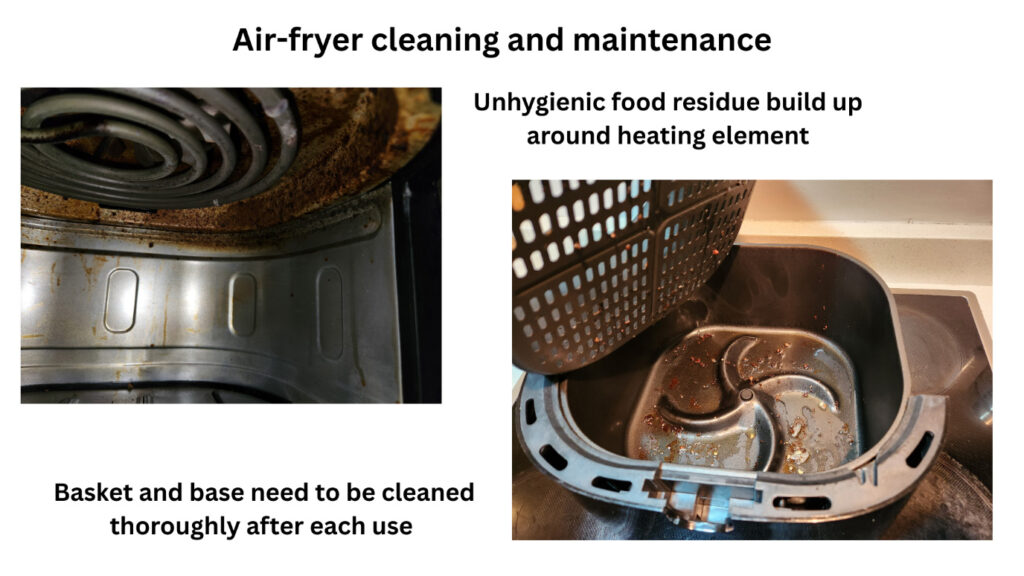
A Remoska is also five times easier to clean, ten times more hygienic, and easy to store thanks to its compact and portable design.
In fact, the Daily Mail recently advised extreme caution when using air fryers at home, due to a slew of fire hazards reported by insurance companies. You can read more about the dangers of using an air fryer by following this link
[Click here to read the Daily Mail article on the dangers of using an air fryer]
In summary, home users who frequently cook with oil, neglect to thoroughly clean their air fryers, or operate them in confined spaces are considered to be at extremely high risk for home fire hazards.
Take a look at the images below, which compare air fryer cleaning and safety to the Remoska all-in-one cooker.

Remoska uses 220V of AC electricity, like your standard three prong electrical plug. It does not work on 12V DC.
Using a Remoska in your home – Without Solar Power.
Many South Africans choose to use their Remoska all in one pot cookers in their home to reduce their electricity usage and to combat rising electric bills from Eskom. There are many additional benefits to using a Remoska in your home, although for the purposes of this article, we will only look at the electric cost savings and benefits when you do make the switch from using your oven to a Remoska.
Based on using a Remoska four times a week, we have calculated the potential electricity savings are shown in the table below. A Remoska can pay for itself in less than two years.
| Annual energy savings | Peak Rates Savings | Off-peak Rates Savings |
| Remoska Grand vs 3000 Watt oven | R2,499.18 | R1,812.10 |
| Remoska Grand vs 2500 Watt oven | R1982.82 | R1,437.70 |
| Remoska Standard vs 3000 Watt oven | R2685.07 | R1,946.88 |
| Remoska Standard vs 2500 Watt oven | R2,168.71 | R1,572.48 |
If you want to start saving electricity in your home immediately, we suggest you order your Remoska today!

Using a Remoska in your home – With Solar Power.
Most home-based solar users typically have a 5kVA inverter setup, which is used to power most of their electrical devices inside or outside the home — such as lights, television sets, Wi-Fi routers, and other small- to medium-sized household appliances. Additionally, the average home usually has only one 5kW lithium iron phosphate (LiFePO₄) battery. Traditionally, most households do not connect their electric ovens, hobs, or geysers to the system, as the load on the inverter and battery — if used simultaneously with other appliances — may void solar battery warranties, potentially crash the inverter system, or completely deplete the battery power reserves.
Furthermore, it must be noted that most inverters are only around 80% efficient. For most home solar setups using LiFePO₄ batteries, allowing battery capacity to drop below 20% may void your warranty and guarantees.
This is why many home solar users focus their attention on energy-saving devices and alternatives such as the Remoska — because the sun doesn’t shine every day in South Africa. Plus, what’s the point of having home solar if you can’t use the stored energy at your leisure for essentials like cooking, lighting, and television?
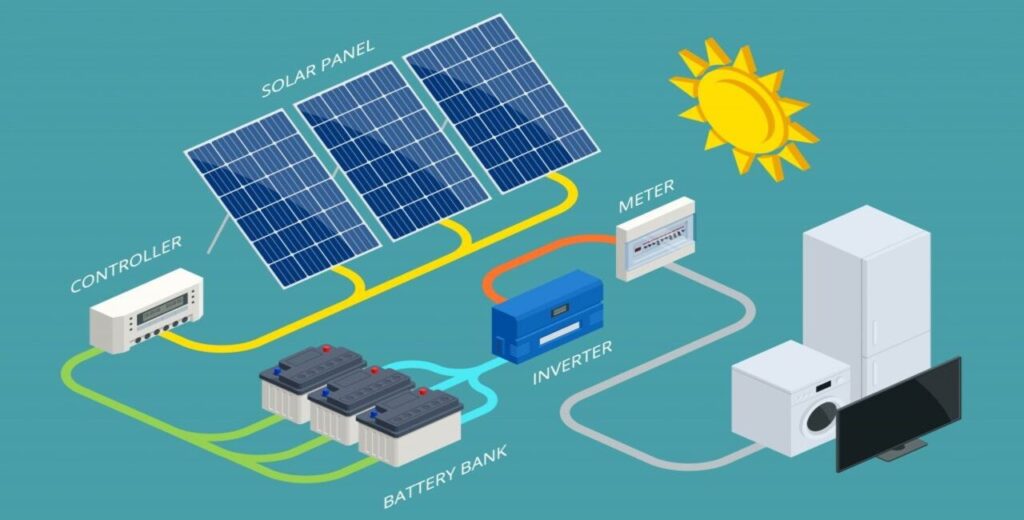
Sure, you could opt for additional batteries and larger inverters — but this is extremely costly. The average 5kW LiFePO₄ battery costs around R15,000 excluding VAT and installation, and may only last up to five years or around 3,600 power cycles.
The cost of purchasing a Remoska compared to buying another limited-lifespan battery is chalk and cheese, as the Remoska will outlast your LiFePO₄ battery at least threefold.
Yes, you could convert your electric oven to gas, although gas oven heating times are usually longer than electric ones. Other downsides of using gas-powered devices at home include safety concerns, gas bottle temperature sensitivity, access, and child safety. Plus, there’s always the added inconvenience of changing or refilling gas bottles. A Remoska, on the other hand, can run 100% on renewable energy generated by your home solar system.
Air fryers are slightly less harmful to home solar systems, as they typically consume only 2,000 to 2,500W of electricity. However, this often means family members have to choose between limited lighting or limited television use during mealtime preparation — because, in reality, you probably won’t have enough stored solar power to run all of these devices simultaneously or even sequentially.
Remember: once the sun sets, you won’t be able to recharge your solar batteries until sunrise. So be cautious if you plan to use your air fryer before switching on the lights or watching TV while relying on stored solar energy.
The low-wattage power advantages of a Remoska are undeniable — which is why it’s recommended for all homes, households, and businesses using solar or renewable energy.
Final Word: The Most Energy-Efficient Cooker for Solar and Portable Power
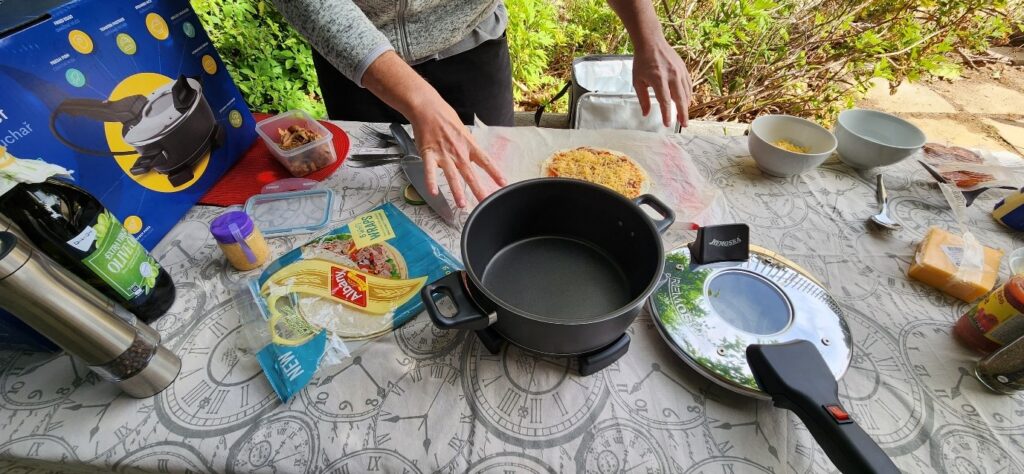
Whether you’re cooking during loadshedding, preparing meals while camping, or running your kitchen on solar energy, you need a cooker that won’t drain your system. The Remoska low wattage cooker offers unbeatable efficiency, flexibility, and performance — far outshining traditional ovens and air fryers in off-grid and energy-conscious environments.
Don’t waste watts — cook smarter not harder with Remoska.